
Visualising a Lifeline: A Tri-Agency Collaboration to Protect Migrant Children
The Challenge: Charting a Course for Cross-Border Protection
When Save the Children, IOM, and UNICEF joined forces to address the perilous journey of unaccompanied Ethiopian children along the Eastern Migration Route, the challenge was immense. The goal was a high-level Regional Dialogue that could forge consensus among stakeholders from origin, transit, and destination countries. My role, within Save the Children’s ACCM team, was to architect the visual narrative for this critical event—transforming complex policy discussions into a unified, accessible, and impactful experience.
The Process: From a Pivotal Misstep to a Unified Vision
In the humanitarian sector, context is everything. My initial concept, “Pathways to Protection,” was well-received by our communication counterparts at IOM and UNICEF. However, an early draft depicted an internal journey, a conceptual error I had made under the pressure of juggling multiple high-stakes projects. A colleague from IOM gently pointed out that the dialogue’s focus was the outward migration of children from Ethiopia.
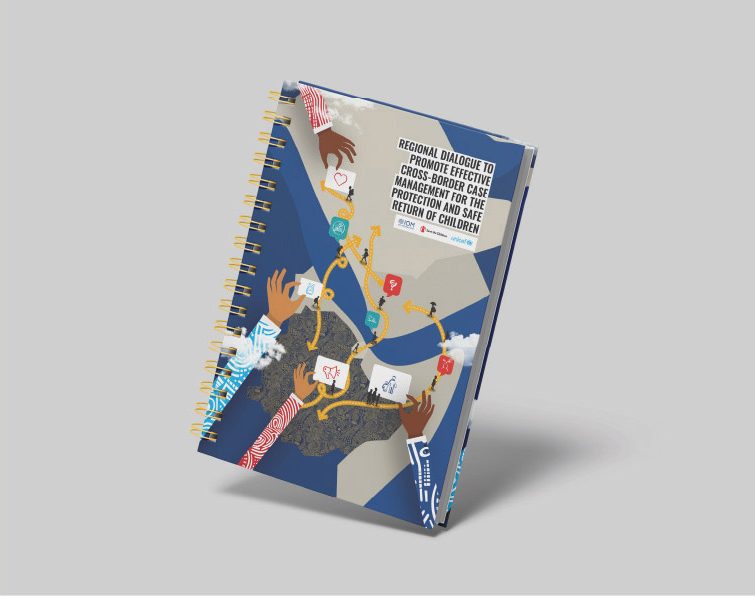
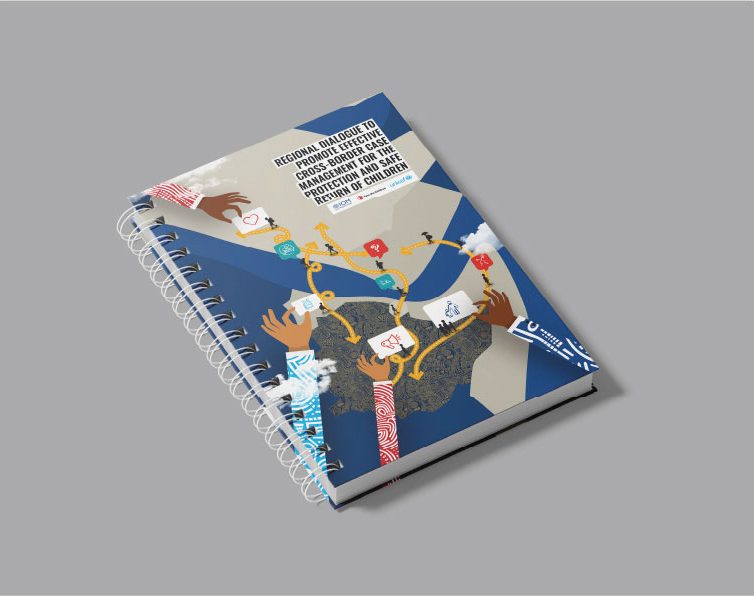
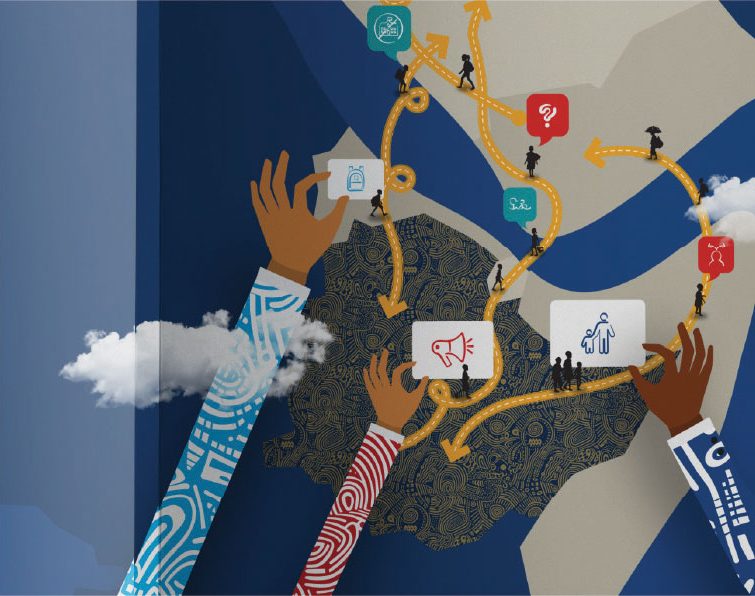
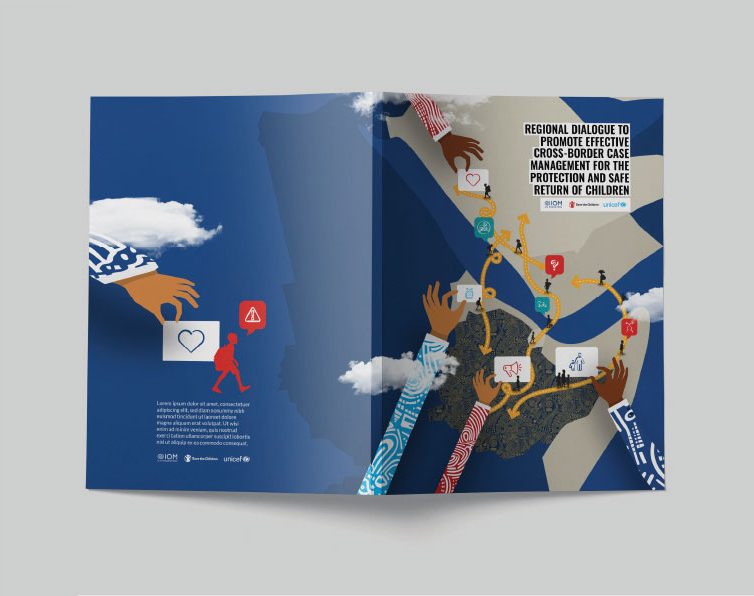
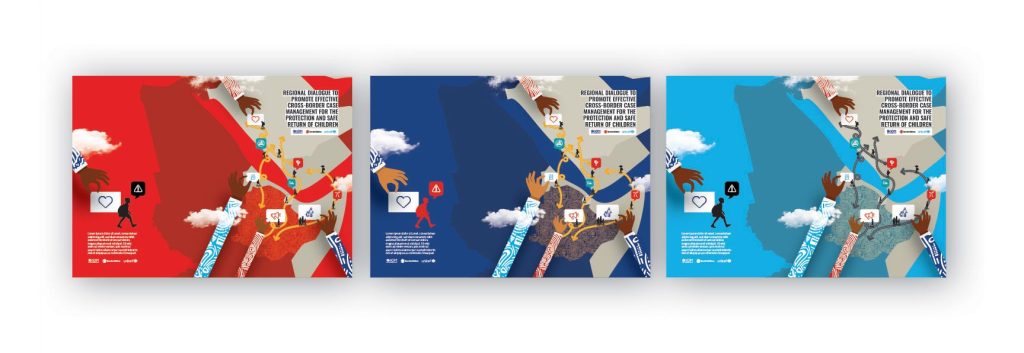
This moment of feedback was not a failure, but a critical turning point. It underscored the profound need for precision and deep listening in our work. Embracing this, I returned to the drawing board, not with frustration, but with a renewed sense of purpose. The revised concept, developed in close collaboration, became a powerful visual metaphor. It featured an illustrative map of the region, with hands representing the diverse stakeholders—governments, NGOs, and the children themselves—interweaving to create a protective path. This wasn’t just a design; it was a story of collaboration, safety, and hope, adaptable to different colour palettes that reflected the distinct brand identities of all three partner organisations.
The Strategy: More Than Ink and Paper
My contribution extended far beyond illustration. I was the architect of a holistic event identity system designed for impact and efficiency:
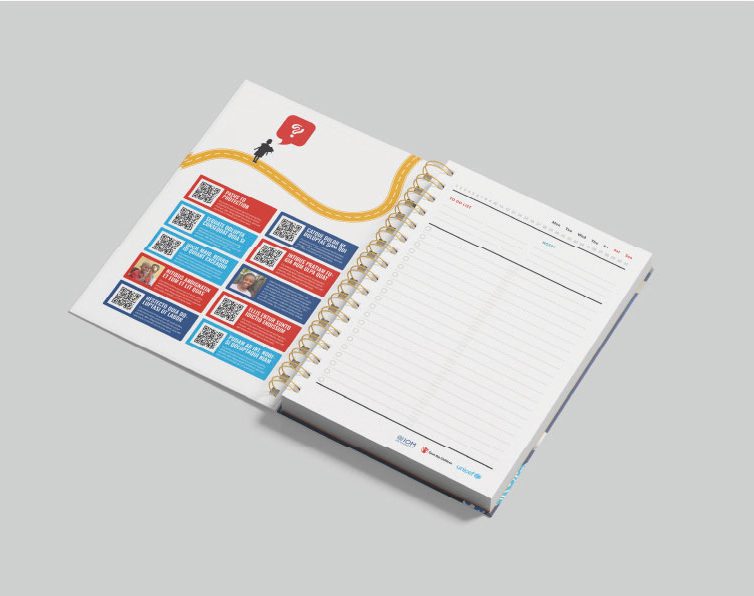
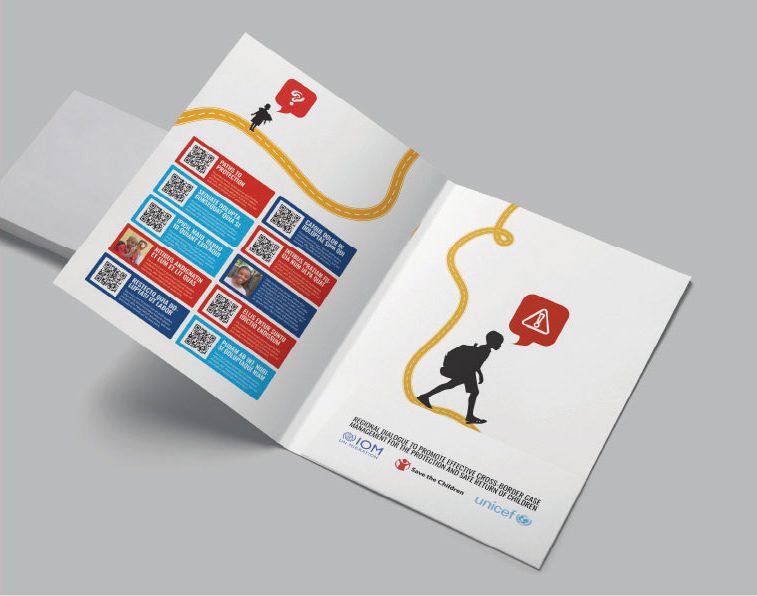
Comprehensive Branding: I developed a full suite of materials, including branded folders, notebooks, and PowerPoint templates, that created a cohesive and professional atmosphere for the three-day dialogue.
Dynamic Digital Engagement: I designed and animated content for the main LED screen, transforming a static backdrop into a dynamic channel for key messages and event information, which I managed live throughout the event.
Innovative Sustainability: In a strategic move to reduce paper waste and enhance accessibility, we decided to house all event documents on a centralized SharePoint site. I designed a dedicated page within the event notebook and folder featuring QR codes and links, allowing participants to directly access the specific resources they needed. This hybrid physical-digital approach not only aligned with our commitment to sustainability but also provided a lasting resource hub for attendees.
The Impact: Facilitating Dialogue, Forging Pathways
The result was a seamless, visually unified event that empowered decision-makers. The strategic design system didn’t just look good; it facilitated collaboration and underscored the gravity of the mission. By managing the complex logistics of last-minute, multi-item procurement and delivering a sophisticated multimedia experience, I helped create an environment where vital conversations about child protection could thrive.
This project is a testament to my belief that design in the humanitarian space is a strategic tool. It’s about building bridges—between organisations, across borders, and through complex challenges—to forge a tangible pathway to protection for the world’s most vulnerable children.
No Comments